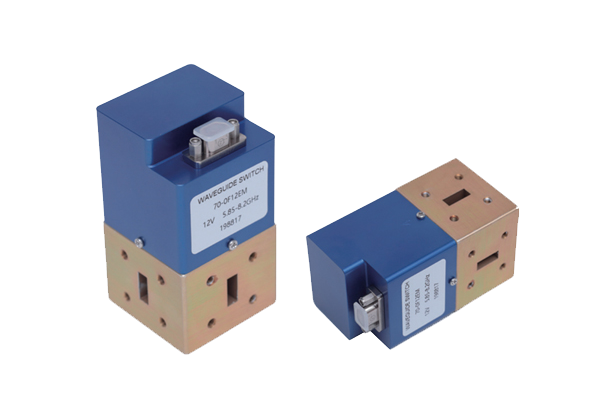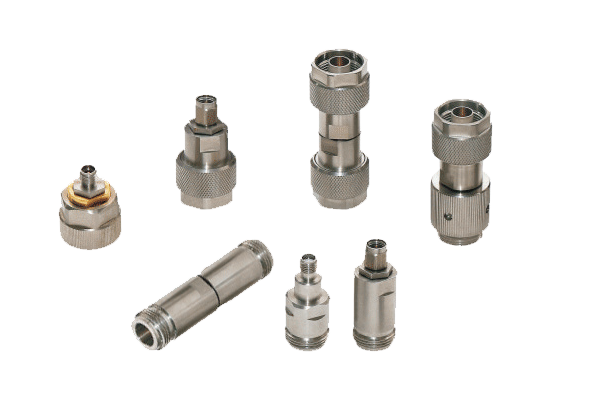
PIN diodes have evolved into key components for microwave and RF applications due to their built-in device properties Their quick conductive to nonconductive switching and compact capacitance with limited insertion loss make them perfect for switches modulators and attenuators. The core switching mechanism for PIN diodes is based on bias-driven control of current across the junction. The applied voltage modifies the depletion layer thickness at the p–n interface thus affecting conductivity. Tuning the bias current allows PIN diodes to switch effectively at RF frequencies with reduced distortion
In systems that require precise timing and control PIN diodes are commonly integrated into sophisticated circuit topologies They can function inside RF filters to permit or attenuate targeted frequency bands. Additionally their ability to handle elevated power levels makes them fit for amplifier power divider and generator circuits. The push for compact efficient PIN diodes has led to broader use in wireless communications and radar systems
Evaluating Coaxial Switch Design and Functionality
Designing coaxial switches involves a delicate process that must account for many interrelated parameters Performance depends on which switch style is used the operational frequency and insertion loss performance. Coaxial switch optimization emphasizes low insertion loss combined with high interport isolation
Assessment of switch performance typically measures metrics including return loss insertion loss and isolation. Performance figures are derived from simulation modeling theoretical analysis and empirical testing. Rigorous performance analysis is necessary to secure dependable coaxial switch operation
- Simulations combined with analytic methods and practical experiments are standard for coaxial switch evaluation
- Coaxial switch behavior is sensitive to temperature, impedance mismatch and assembly tolerances
- Contemporary advances and emerging developments in coaxial switch engineering seek improved metrics with smaller size and reduced power
Strategies to Optimize LNA Performance
Optimizing the LNA’s gain efficiency and operational performance is central to maintaining signal integrity The process needs precise choice of transistors bias points and topology design. A strong LNA design reduces noise contribution and boosts signal amplification with minimal distortion. Simulation based analysis is critical to understand design impacts on LNA noise performance. Lowering the Noise Figure is the aim, indicating enhanced preservation of input signal over generated noise
- Choosing active devices with low noise profiles is a key requirement
- Properly set optimal and appropriate biasing reduces transistor noise generation
- The configuration and topology substantially shape the amplifier’s noise response
Employing matching networks noise suppression and feedback systems refines LNA performance
Radio Frequency Path Routing with Pin Diodes

PIN diode based routing offers versatile efficient control of RF signal paths Their high-speed switching lets systems dynamically alter signal routing in real time. PIN diodes provide the dual benefit of small insertion loss and high isolation to protect signals. PIN diodes are used in antenna switch matrices duplexers and phased array RF systems
The applied control voltage modulates resistance to toggle the diode between blocking and passing states. While in the off state the diode creates a high impedance path that blocks the signal flow. Applying a forward control voltage lowers the diode’s resistance enabling signal transmission
- Additionally PIN diode switches present fast switching low energy use and compact dimensions
Multiple configurable architectures and design schemes of PIN diode switches facilitate complex routing operations. Combining multiple switch elements makes possible dynamic switching matrices enabling flexible routing
Performance Assessment for Coaxial Microwave Switches
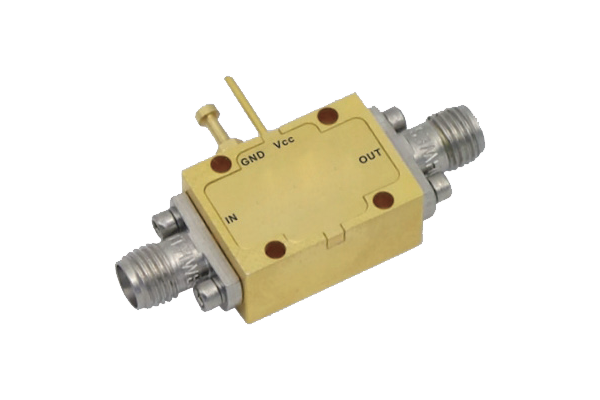
Comprehensive testing evaluation and assessment of coaxial microwave switches ensure optimal performance in systems. Various performance drivers like insertion reflection transmission loss isolation switching speed and bandwidth influence switch behavior. Complete assessment involves quantifying parameters over diverse operational and environmental test conditions
- Moreover additionally furthermore the evaluation ought to include reliability robustness durability and environmental tolerance considerations
- Ultimately comprehensive evaluation outputs provide critical valuable and essential guidance for switch selection design and optimization for targeted uses
Comprehensive Survey on Minimizing LNA Noise
Low noise amplifier designs are vital to RF wireless systems for amplifying weak signals and controlling noise. The article delivers a wide-ranging examination analysis and overview of methods used to reduce noise in LNAs. We examine investigate and discuss the fundamental noise sources including thermal shot and flicker noise. We additionally survey noise matching feedback circuit methods and optimal biasing approaches to reduce noise. The review highlights recent progress in LNA design including new semiconductor materials and circuit concepts that lower noise figures. By elucidating noise reduction principles and applied practices the article aims to be a valuable resource for engineers and researchers building high performance RF systems
PIN Diode Uses in Rapid Switching Systems
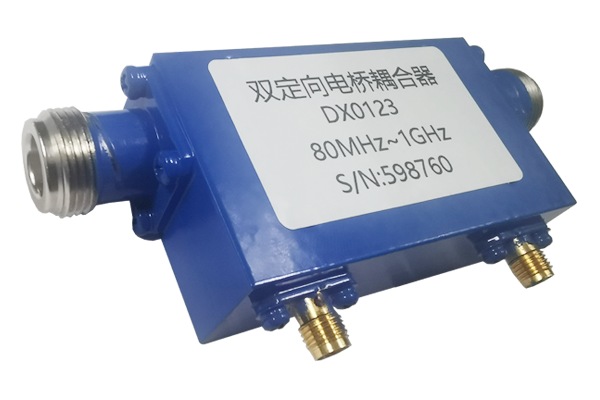
PIN diodes have exceptional unique remarkable properties that suit high speed switching applications Their small capacitance and low resistance facilitate high speed switching suitable for accurate timing control. Moreover PIN diodes exhibit linear proportional responses to applied voltage enabling precise amplitude modulation and switching control. This flexible adaptable versatile behavior makes PIN diodes suitable applicable and appropriate for varied high speed roles They find use in optical communications microwave circuitries and signal processing devices and equipment
Coaxial Switch Integration with IC Switching Technology
IC based coaxial switch technology advances signal routing processing and handling in electronic systems circuits and devices. IC coaxial switch solutions orchestrate control management and directed signal flow through coaxial media while keeping high frequency performance and reduced latency. Miniaturized IC implementations provide compact efficient reliable and robust designs enabling dense interfacing integration and connectivity
- By carefully meticulously and rigorously applying these approaches designers can realize LNAs with outstanding noise performance enabling sensitive reliable electronic systems By meticulously carefully and rigorously adopting these practices designers can deliver LNAs with excellent noise performance supporting reliable sensitive systems Through careful meticulous and rigorous application of such methods engineers can design LNAs with top tier noise performance enabling dependable sensitive systems By meticulously carefully and rigorously applying these methods developers can produce LNAs low-noise amplifier with superior noise performance enabling sensitive reliable electronics
- Use scenarios include telecommunications data communication systems and wireless networks
- Coaxial switch IC implementations support aerospace defense and industrial automation applications
- Consumer electronics audio visual equipment and test and measurement systems are typical domains
Low Noise Amplifier Design for mmWave Systems
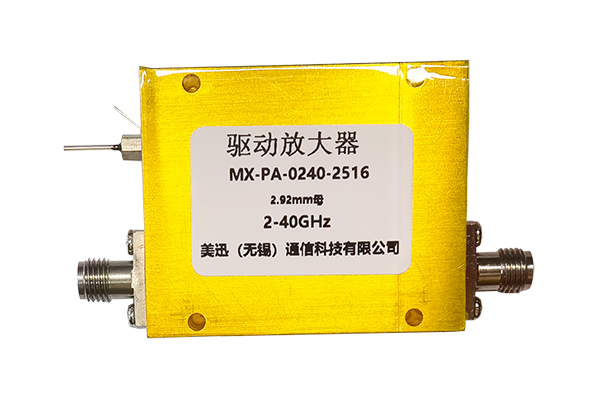
LNA engineering for mmWave bands involves dealing with increased attenuation and heightened noise impacts. Parasitic capacitances and inductances become major factors at mmWave demanding careful layout and parts selection. Minimizing mismatch and maximizing gain remain critical essential and important for mmWave LNA performance. Device selection including HEMTs GaAs MESFETs and InP HBTs plays a decisive role in attaining low noise figures at mmWave. Additionally furthermore moreover careful design implementation and optimization of matching networks is vital for efficient power transfer and impedance matching. Attention to package parasitics is crucial as they have potential to harm mmWave LNA performance. Implementing low-loss transmission lines along with proper ground plane design is essential necessary and important for reducing reflection and ensuring bandwidth
Characterize and Model PIN Diodes for RF Switching Applications
PIN diodes function as crucial components elements and parts across various RF switching applications. Accurate precise and detailed characterization is critical for designing developing and optimizing reliable high performance circuits using PIN diodes. This process includes analyzing evaluating and examining the devices’ electrical voltage and current traits including resistance impedance and conductance. Frequency response bandwidth tuning traits and switching speed latency response time are part of the characterization
Moreover furthermore additionally developing accurate models simulations and representations for PIN diodes is vital essential and crucial for predicting behavior in complex RF systems. Various numerous diverse modeling approaches exist including lumped element distributed element and SPICE models. Selecting an appropriate model simulation or representation depends on the specific detailed application requirements and the desired required expected accuracy
Innovative Advanced Techniques for Low Noise Amplifier Engineering
Developing LNAs involves diligent consideration of circuit topology and components to obtain optimal noise performance. Recent advances in semiconductor tech have unlocked innovative groundbreaking sophisticated LNA design techniques that diminish noise greatly.
Notable techniques include employing utilizing and implementing wideband matching networks incorporating low-noise transistors with high intrinsic gain and optimizing biasing schemes strategies and approaches. Moreover advanced packaging techniques and effective thermal management significantly contribute to reducing external noise sources. With careful meticulous and rigorous execution of these strategies designers can obtain LNAs exhibiting excellent noise performance for sensitive reliable systems